


Estimated reading time:13 minutes
Financial institutions sit at the center of the global economy. That position comes with enormous responsibility and enormous control. Every day, banks, credit unions, insurance firms, and payment processors etc. handle billions of transactions. Hidden within that volume are fraudulent payments, laundered money, and financing to terrorist networks.
Financial crime risk management is the discipline that protects institutions from these threats. It is not a single tool or a one-time audit. It is a continuous, structured process of identifying where an institution is vulnerable, measuring the severity of those vulnerabilities, and putting controls in place to reduce them.
This guide breaks down what financial crime risk looks like in practice, how institutions assess it, how they manage it, and what good governance around it requires.
Table of contents
- What is Financial Crime Risk?
- Key Takeaways
- What Is Financial Crime Risk Management?
- The Regulatory Framework
- Performing a Financial Crime Risk Assessment
- Core Components of a Financial Crime Risk Management Program
- Technology in Financial Crime Risk Management
- Building a Culture of Compliance
- Best Practices for Financial Crime Risk Management
What is Financial Crime Risk?
Financial crime risk is the probability that an institution will suffer harm (financial, legal, or reputational) because a criminal exploits its products, processes, delivery channels or people.
It is not necessary that the harm to an FI always come from an external attacker in every instance. Internal stakeholder like Employees, contractors, and even senior executives are responsible for a significant share in financial crime. While organized crime syndicates recruit insiders, customers abuse products in ways that were never intended. Third-party vendors may create blind spots in compliance programs.
The most common topologies of financial crime risk include:
- Money laundering: means that criminals move illicit funds through legitimate accounts to disguise their origin
- Fraud: false representations used to obtain money or assets
- Terrorist financing: means moving funds to support terrorist activities in a country
- Bribery and corruption: payments made to influence decisions improperly
- Market abuse and insider trading: using non-public information to gain an unfair trading advantage
- Tax evasion: deliberately misrepresenting income or assets to avoid taxation
- Identity theft: means using another person’s identity to access accounts or credit
- Embezzlement: employees misappropriating funds they are entrusted to manage
- Payroll and billing schemes: falsifying invoices or payroll records to divert funds
Each of the above topologies carries a different risk profile depending on the institution’s size, geography, customer base, and product mix.
Key Takeaways
Financial crime risk management is a continuous enterprise discipline for identifying exposure, assessing inherent risk, evaluating controls, and acting on residual risk. An effective program connects governance, customer due diligence, sanctions and transaction monitoring, fraud prevention, investigations, technology, testing, documentation, and a strong compliance culture.
- Financial crime exposure extends beyond money laundering to fraud, terrorist financing, bribery and corruption, market abuse, tax evasion, identity theft, embezzlement, and internal misconduct.
- The article uses a six-stage assessment process: define scope, identify specific risks, rate inherent risk, evaluate controls, determine residual risk, and document and act on the results.
- A mature program integrates AML, sanctions compliance, fraud prevention, KYC and customer due diligence, transaction monitoring, investigation, and regulatory reporting rather than treating them as isolated controls.
- Technology can support monitoring, behavioral analysis, case management, and reporting, but it does not replace reliable data, validation, documented procedures, accountable governance, or human judgment.
- Sustainable risk management depends on documented methodology, independent testing, role-specific training, complete records, defined risk appetite, and leadership accountability.
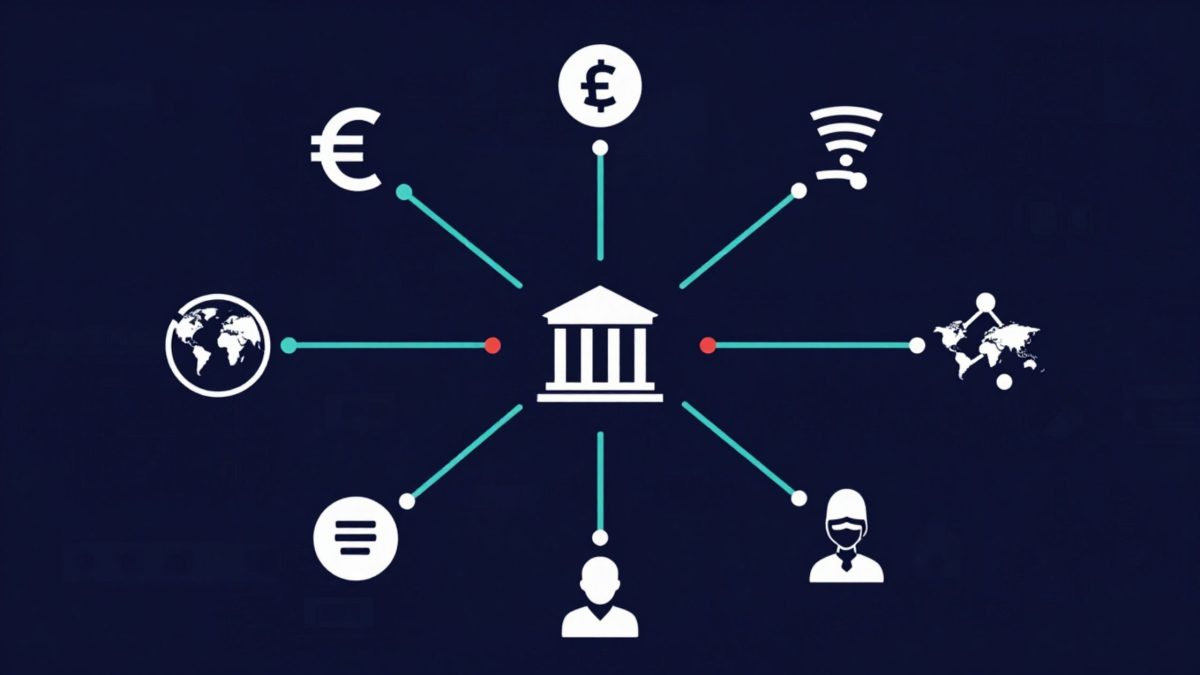
What Is Financial Crime Risk Management?
What is financial crime risk management? It is the organized set of policies, controls, processes, and technologies that a financial institution uses to detect, prevent, investigate, and report financial crime.
What is financial crime risk management, more precisely? It is a governance function. It answers three questions on a continuous basis:
- Where is the institution exposed?
- How severe is that exposure?
- What is being done about it?
The answer to those questions drives everything: staffing decisions, technology investments, training programs, and regulatory reporting.
Financial crimes risk management sits at the intersection of compliance, operations, and technology. It is not owned by a single team. The compliance function sets the policies. Operations executes the controls. Technology automates the detection. Senior leadership and BOD are accountable for strict oversight.
When done well, financial crimes risk management mitigates the risk of financial loss and regulatory enforcement, and protects the institution’s reputation. When done poorly, the consequences are severe. The UNODC estimates that between 2 and 5% of global GDP is laundered globally each year, and that figure does not include the direct losses from fraud and theft.

The Regulatory Framework
Financial crime risk management doesn’t function in isolation. Instead, it works within a complex regulatory landscape that differs across regions but still upholds some fundamental principles.
In USA, the Financial Crimes Enforcement Network (FinCEN) establishes the core framework:
- The Bank Secrecy Act (BSA) requires financial institutions to maintain records and report cash transactions beyond CTR liability and file reports of suspicious activity etc. It creates the paper trail that investigators use to trace criminal funds.
- The USA PATRIOTextended anti-money laundering (AML) requirements and introduced Know Your Customer (KYC) obligations. KYC requires institutions to verify the identity of customers, understand the nature of their business, and assess the risk they represent etc. before onboarding them.
- Know Your Customer (KYC) is not a checkbox. It is a continuous obligation. Customer circumstances change. Beneficial ownership structures shift, risk profiles evolve, therefore, FIs that treat KYC as a one-time onboarding exercise are exposed to faruds, money laundering etc.
Globally, the Financial Action Task Force (FATF) sets international standards for AML and counter-terrorist financing. Its Recommendations form the basis of legislation across global financial jurisdictions. It is required for the FIs which have cross-border operations to navigate multiple overlapping regulatory regimes simultaneously.
Non-compliance carries real consequences. Regulatory fines for AML failures have reached into the billions for major institutions. Beyond the financial penalty, a public enforcement action damages customer trust in ways that take years to repair.
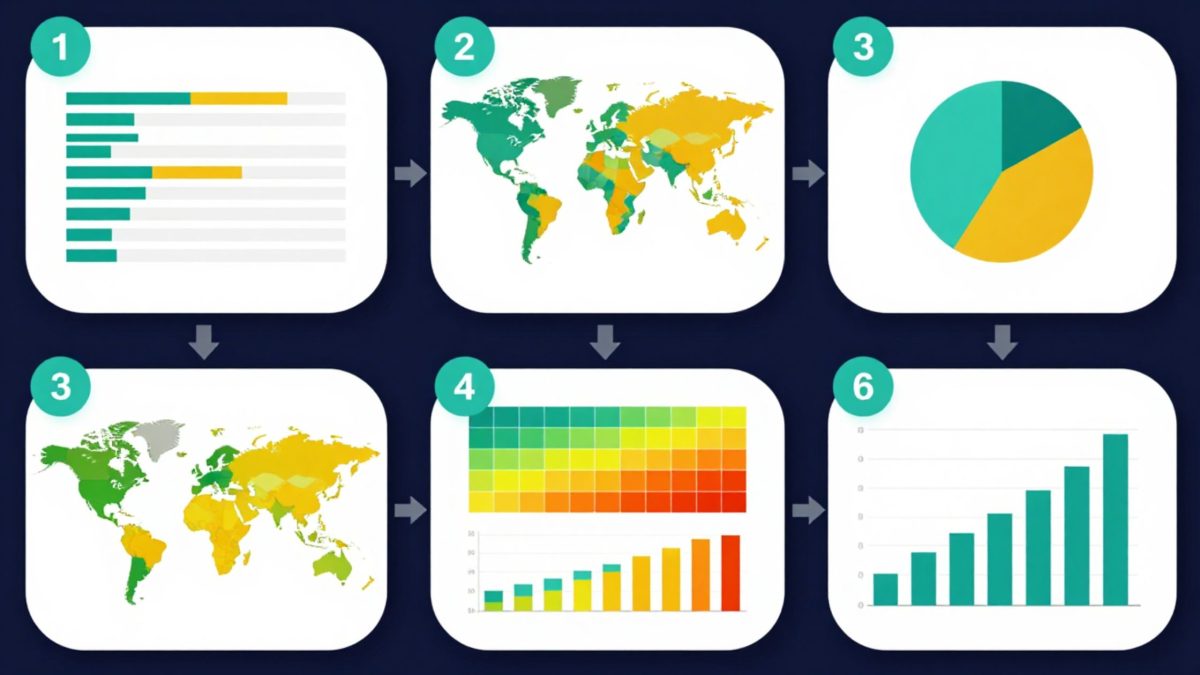
Performing a Financial Crime Risk Assessment
A financial crime risk assessment is the foundation of any effective financial crime risk management program. It is a structured process that:
- Identifies where an institution is vulnerable
- Evaluates the likelihood and impact of each risk, and
- Informs how controls should be prioritized.
A financial crime risk assessment is not a one-time event. Risks change as products change, as customer demographics shift, and as criminal methods evolve. Institutions should conduct formal risk assessments periodically, aligning with their risk profile and specific regulatory guidance (such as FCA expectations), and trigger additional reviews when significant changes occur.
Step 1: Define the Scope
The assessment begins by mapping the institution’s exposure. This includes:
- Documenting products and services offered (loans, deposits, payments, investments)
- Identifying customer segments served (retail, commercial, high-net-worth, correspondent banks)
- Recording geographies covered, including jurisdictions with elevated risk profiles
- Documenting deliviery channels through which business is conducted (branch, online, mobile, third-party agents)
Each of these dimensions affects financial crime risk differently. An FI that processes international wire transfers faces different exposure than a domestic retail credit union.
Step 2: Identify the Specific Risk
With scope defined, the institution identifies specific financial crime risks associated with each product, customer type, geography, and channel. This draws on internal data (past incidents, suspicious activity reports etc.) as well as external information, including regulatory guidance, law enforcement advisories, and industry benchmarks.
Common risk categories to evaluate include money laundering, fraud, bribery, terrorist financing, sanctions violations, and insider threats etc. Each should be assessed independently, because the controls required to manage them differ significantly.
Step 3: Rate the Inherent Risk
Inherent risk is the level of exposure that exists before any controls are applied. Rating inherent risk requires judgment about two factors:
- The likelihood that a crime could occur, and
- The impact it would have if it did
High inherent risk does not automatically mean a problem. It means the institution needs strong controls to bring the residual risk down to an acceptable level.
Step 4: Evaluate Existing Control
Controls are the policies, processes, and systems that reduce inherent risk. The financial crime risk assessment must evaluate whether existing controls are designed appropriately and operating effectively.
Common controls include:
- Customer onboarding and due diligence (CDD), with enhanced due diligence (EDD) for high-risk customers
- Transaction monitoring systems that flag unusual activity
- Sanctions screening against watchlists and blacklists
- Employee training programs
- Internal audit and independent testing
A control that exists on paper but is not functioning as intended provides no protection. The assessment must distinguish between controls that work and controls that merely exist.
Step 5: Determine Residual Risk
Residual risk is what remains after controls are applied. The gap between inherent risk and residual risk tells the institution how much its controls are actually reducing exposure. Where residual risk remains above the institution’s risk appetite, additional controls are needed.
Step 6: Document, Report, and Act
The financial crime risk assessment must be thoroughly documented. Regulators expect to see not only the conclusions but also the methodology, data sources, and the rationale for risk ratings. The results should be reported to senior leadership and the board. Action plans should be assigned, with owners, timelines, and metrics.

Core Components of a Financial Crime Risk Management Program
A mature financial crimes risk management program has several interlocking components. Each one depends on the others.
Anti-Money Laundering (AML)
AML is the most resource-intensive component of financial crime risk management. It involves monitoring transactions for patterns consistent with laundering, filing Suspicious Activity Reports (SARs) with regulators, and maintaining records that support law enforcement investigations.
AML programs need to be customized to fit each institution’s unique risk profile. A framework suitable for a commercial bank won’t be effective for a global investment bank, given the differences in products, customer base, and transaction volumes etc. Controls must be adapted accordingly.
Sanctions Compliance
Sanctions screening checks customers, transactions, and counterparties against lists maintained by independent bodies e.g., the U.S. Office of Foreign Assets Control (OFAC) and the UN Security Council Consolidated List, etc. A match or even a near-match must be reviewed before funds can be released.
Sanctions lists change frequently. FIs cannot rely on outdated lists, similarly screening only at onboarding rather than continuously also create serious exposure.
Fraud Prevention
Fraud prevention covers a wide range of threats, from account takeover and payment fraud to first-party fraud and synthetic identity schemes. Controls include behavioral analytics that detect when an account is acting in ways inconsistent with its history, device fingerprinting, and multi-factor authentication.
Fraud losses are direct. They hit the income statement immediately. AML failures, by contrast, often result in regulatory penalties rather than direct losses, and those penalties can be far larger.
KYC and Customer Due Diligence
KYC is the process of identifying that who customers are and understanding why they are doing business with the institution. Customer due diligence collects and documents that information. Enhanced due diligence applies to higher-risk customers, including politically exposed persons (PEPs), customers from high-risk jurisdictions, and those in industries with elevated money laundering risk etc.
Weak KYC is one of the most common findings in regulatory examinations. Institutions that cannot demonstrate they know who their customers are and why they are transacting will face enforcement action.
Transaction Monitoring
Transaction monitoring systems analyze the flow of funds through customer accounts and flag activity that appears inconsistent with the customer’s profile or that matches known patterns of criminal behavior. These systems generate alerts that analysts must review and investigate. Tuning the transaction monitoring scenarios on which the systems generate results is a major challenge for and FI.
Alert volume is a persistent challenge. Systems that generate too many false positives consume analyst capacity without producing useful results. Tuning monitoring rules to reduce noise, while ensuring that genuine suspicious activity is still detected, requires ongoing attention.

Technology in Financial Crime Risk Management
Manual processes cannot keep pace with the volume and complexity of modern financial crime. Automation has become a practical necessity for institutions scaling their compliance operations.
Transaction monitoring platforms process millions of transactions continuously. Advanced financial crime analytics and behavioral modeling tools build baseline profiles for each customer and flag deviations. Case management systems organize investigations and document findings. Regulatory reporting tools ensure that SARs and other required filings are submitted accurately and on time.
Machine learning has changed what is possible in financial crime risk management. Models trained on historical data can identify subtle patterns that rule-based systems miss. They can adapt as criminal methods evolve. They can reduce false positive rates while maintaining or improving detection rates.
That said, technology is not a substitute for human judgment. Analysts are still needed to review alerts, make decisions about whether activity is suspicious, and document their reasoning etc. Technology supports that work, it does not replace it.
Building a Culture of Compliance
Controls and technology can only do so much. The culture of the institution determines whether those controls are taken seriously.
Employees who understand why financial crime risk management matters are more likely to follow procedures, report concerns, and exercise judgment when something does not look right. Employees who see compliance as a box-checking exercise are more likely to take shortcuts.
Instead of e-learning modules, trainings should be role-specific, scenario-based, reinforced through ongoing communication and based on real life case studies. The 1st line of defence employees need to recognize red flags. Operations staff need to understand why certain controls exist. Leadership needs to model the right behavior.
Whistleblower channels give employees a safe way to report concerns about potential criminal activity or control failures. An institution without a credible internal reporting mechanism is more likely to discover problems through a regulatory examination or a news report than through its own systems.
Best Practices for Financial Crime Risk Management
An effective financial crime risk management program is built on a set of consistent practices:
- Know your risk appetite. The board and senior leadership must define how much financial crime risk the institution is willing to accept. That definition drives every other decision in the program.
- Conduct regular risk assessments. The financial crime risk assessment process must be repeated periodically and whenever significant changes occur. A risk profile that was accurate two years ago may be dangerously out of date today.
- Invest in data quality. Detection systems are only as good as the data that feeds them. Customer records, transaction histories, and beneficial ownership information etc. must be complete, accurate, and current.
- Test your controls. Independent testing by internal audit, compliance review, or external parties verifies that controls are working as required. Untested controls are assumptions, not defenses.
- Maintain complete documentation. Regulators do not accept verbal assurances. Every risk assessment, control evaluation, investigation, and decision etc. must be documented in a way that supports examination.
- Engage with regulators. Regulatory expectations evolve and are communicated through regulations, circulars etc. Institutions that engage proactively with their regulators, asking questions, sharing challenges, and seeking guidance, are better positioned than those that treat regulators as adversaries.
Conclusion
Managing financial crimes riskis one of the most challenging activities within the realm of financial services. The risk is genuine, and the expectations of regulators are extremely high; failure to meet those expectations will mean serious fines, potential reputation damage, and direct losses from such cases.
Effective management of financial crime risks is done by viewing this process as an essential business activity and investing in adequate resources, processes, and technologies according to the true nature of risks faced. A financial crime risk assessment will be conducted that accurately describes the situation, and a culture where compliance is mandatory will be created.
There is no point at which financial crimes risk management is complete. The risks evolve continuously, and the program must evolve with them. The goal is not perfection. It is a sustained, credible effort to detect, prevent, and respond to financial crime that demonstrates to regulators, customers, and counterparties that the institution takes this obligation seriously.