

Estimated reading time:6 minutes
Financial crime compliance has evolved from a regulatory obligation into a core risk management function. Institutions today operate in an environment where regulatory expectations are rising, financial crime typologies are becoming more sophisticated, and enforcement actions are increasingly punitive.
A well-designed financial crime compliance framework is no longer optional. It is a strategic necessity that enables institutions to manage exposure, maintain regulatory alignment, and protect their reputation.
This blog outlines a practical, implementation-focused approach to building a robust and scalable framework.
Key Takeaways
An effective financial crime compliance framework converts legal and regulatory obligations into risk-based governance, policies, controls, monitoring, investigations, reporting, testing, and remediation. Its effectiveness depends on accountable leadership, reliable data, appropriately calibrated technology, documented decisions, and continuous improvement.
- Financial crime compliance has become essential for institutions to manage risks and meet regulatory requirements.
- A robust financial crime compliance framework includes governance, risk assessments, policies, customer due diligence, transaction monitoring, and training.
- Technology plays a significant role but should complement processes; effectiveness relies on calibration and data quality.
- Strong frameworks prevent regulatory fines and enhance operational efficiency, requiring strategic investment and ongoing improvement.
- Challenges like data silos and high false positive rates necessitate a structured, cohesive approach to implementation.
Table of contents
- Key Takeaways
- Understanding Financial Crime Compliance in Practice
- What are the Core Components of a Financial Crime Compliance Framework?
- Governance and Oversight in Financial Crime Compliance Program
- Risk Assessment in Financial Crime Compliance
- Policies, Procedures, and Regulatory Controls
- Customer Due Diligence and Onboarding Controls
- Transaction Monitoring and Screening Controls
- Investigation and Case Management
- Reporting and Regulatory Engagement
- Training and Culture of Accountability
- Technology in Financial Crime Solutions
- Cost of Weak Financial Crime Compliance
- Common Financial Crime Compliance Challenges
- How to Implement a Financial Crime Compliance Framework?
Understanding Financial Crime Compliance in Practice
At its core, financial crime compliance refers to the systems, controls, and governance structures designed to prevent, detect, and report illicit activities such as money laundering, terrorist financing, fraud, and sanctions violations.
However, effective financial crime and compliance is not about isolated controls. It requires a cohesive structure where policies, systems, and operational processes work together.
Institutions often rely on a mix of internal capabilities and external financial crime services or financial crime compliance consulting to design and strengthen their frameworks.
What are the Core Components of a Financial Crime Compliance Framework?
A financial crime compliance framework is the integrated system of governance, policies, and operational controls that an institution uses to detect and prevent illicit finance risks. A robust framework is built on clearly defined pillars, including accountable oversight, risk assessments, customer due diligence, transaction monitoring, and regulatory reporting. Every part must align with the institution’s risk profile and the specific rules that govern it.
Governance and Oversight in Financial Crime Compliance Program
Good compliance starts with strong governance. Some of the most important parts are:
- Clear accountability at the board and senior management level
- Defined roles for compliance, risk, and business units
- Independent oversight and escalation mechanisms
Even the best solutions for fighting financial crime won’t work if there isn’t strong governance.
Risk Assessment in Financial Crime Compliance
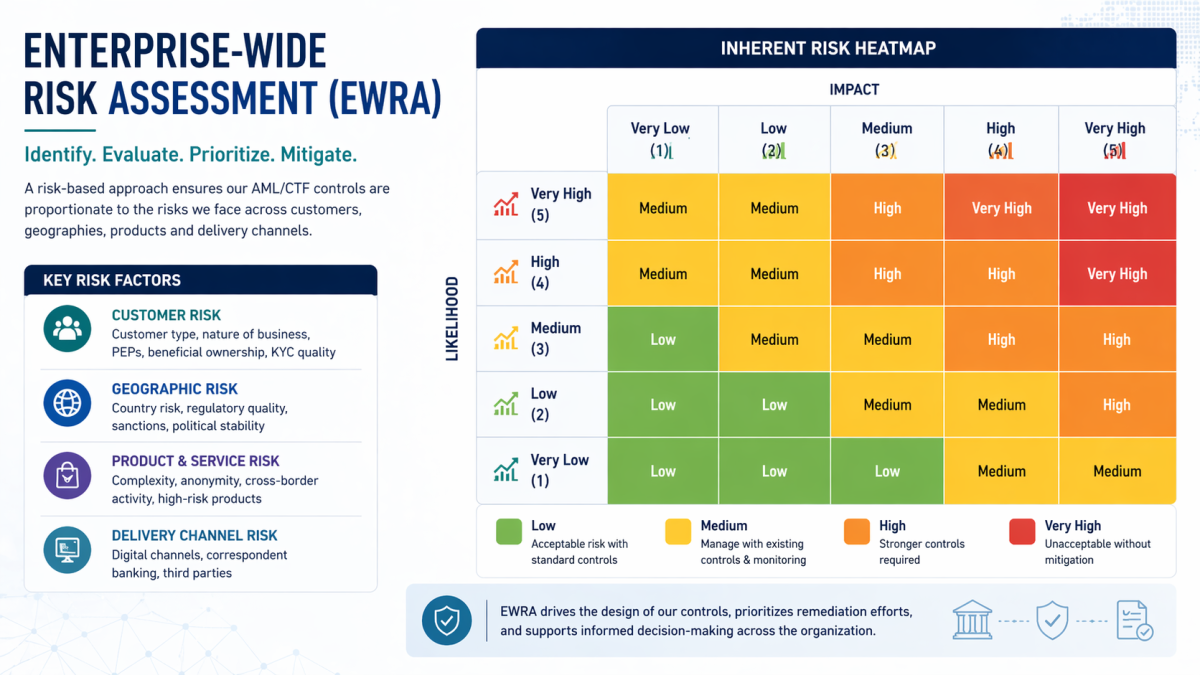
The framework must be risk-driven. An effective risk assessment evaluates:
- Customer risk (e.g., PEPs, high-risk profiles)
- Geographic exposure
- Product and service risks
- Delivery channels
That is the basis for financial crime compliance risk management. This means that the control measures are suitable.
Policies, Procedures, and Regulatory Controls
Policies change rules into things that people expect to happen. They should align with:
- Applicable financial crime law
- International standard set by FATF and local regulatory guidance (such as the recent FCA AML oversight reforms).
- Internal risk appetite
Procedures take it a step further by detailing how controls are performed, documented, and reviewed.
Customer Due Diligence and Onboarding Controls
It’s very important to manage the customer verification process through a structured KYC onboarding onboarding guide across the customer life cycle. All effective frameworks include:
- Risk-based customer onboarding
- Due diligence for high-risk customers
- Ongoing monitoring and periodic reviews
A lot of organizations use financial crime compliance services to make things more consistent and easier to grow.
Transaction Monitoring and Screening Controls
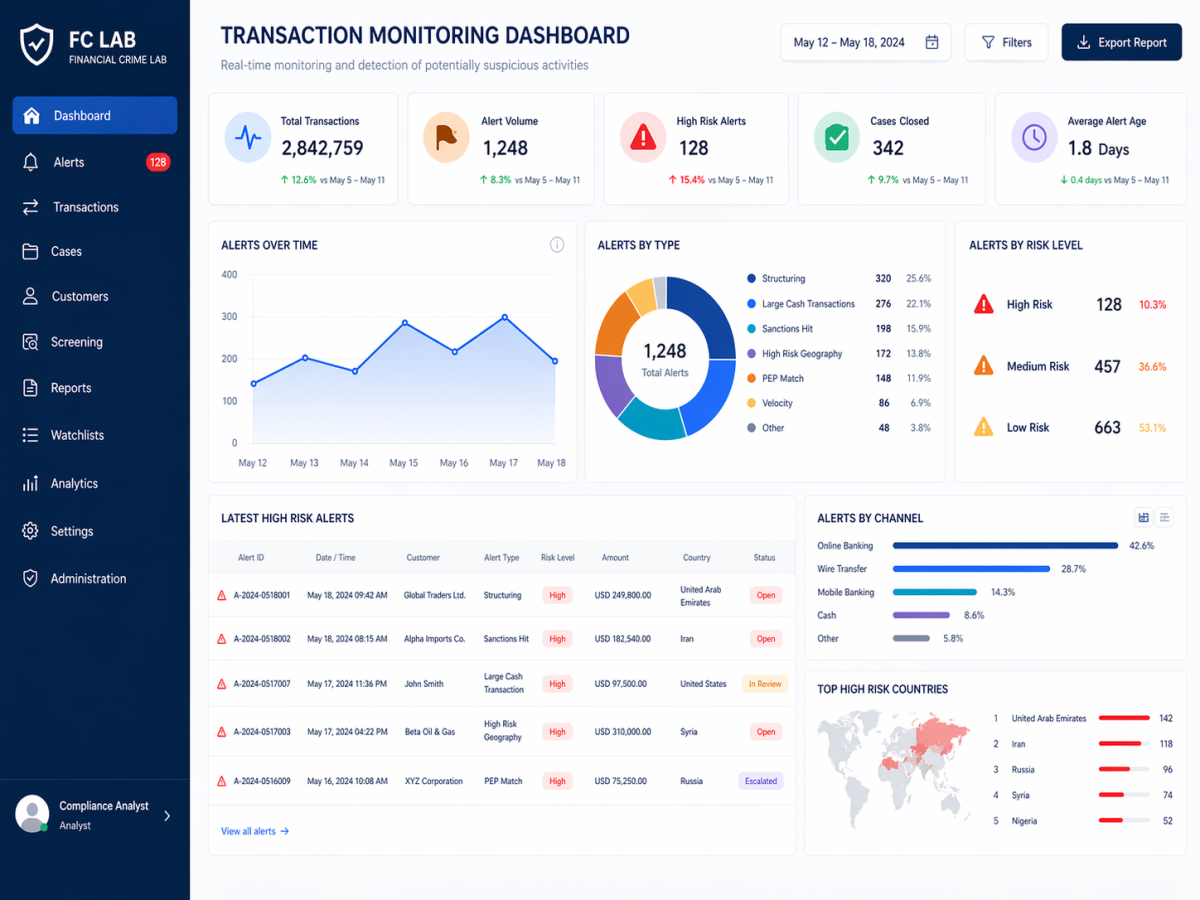
Transaction monitoring or automatic tools are critical to ensure efficient operations. Key systems include:
- Transaction monitoring for suspicious activity
- Sanctions and watchlist screening
- Adverse media monitoring
More and more, modern compliance programs leverage advanced financial crime analytics, AI, and automation to detect illicit patterns and cut down on false positives.
Investigation and Case Management
Case Investigation is only effective when backed by structured investigation processes. A strong framework includes:
- Defined escalation pathways
- Standardized investigation procedures
- Clear decision-making for suspicious activity reporting
This is a key area where a financial crime compliance analyst plays an important role by ensuring that alerts are properly assessed and documented.
Reporting and Regulatory Engagement
Compliance Reporting is one of the main requirements. This includes:
- Suspicious Transaction Reports (STR/SAR)
- Regulatory disclosures
- Ongoing communication with authorities
It is important to ensure information is correct, timely, and easy to verify.
Staying updated on evolving supervision frameworks, such as the recent FCA AML Supervision Reform for UK Professional Services, ensures that your regulatory engagement strategy remains compliant with the latest regulatory expectations.”
Training and Culture of Accountability
A framework is only as strong as the people who put it into practice. Effective programs make sure to provide:
- Role-based training across the organization
- Awareness of emerging risks and typologies
- A culture of accountability and escalation
This is especially important for people working in financial crime compliance. Their decisions directly affect regulatory results.
Technology in Financial Crime Solutions
The use of technology is key to expanding compliance functions. Institutions are increasingly adopting:
- Integrated case management platforms
- Automated risk scoring engines
- Screening and monitoring tools
However, technology alone is not a solution. The effectiveness of financial crime compliance solutions depends on:
- Proper calibration
- Data quality
- Ongoing tuning and validation
A poorly configured system can create operational inefficiencies and regulatory risk.
Cost of Weak Financial Crime Compliance
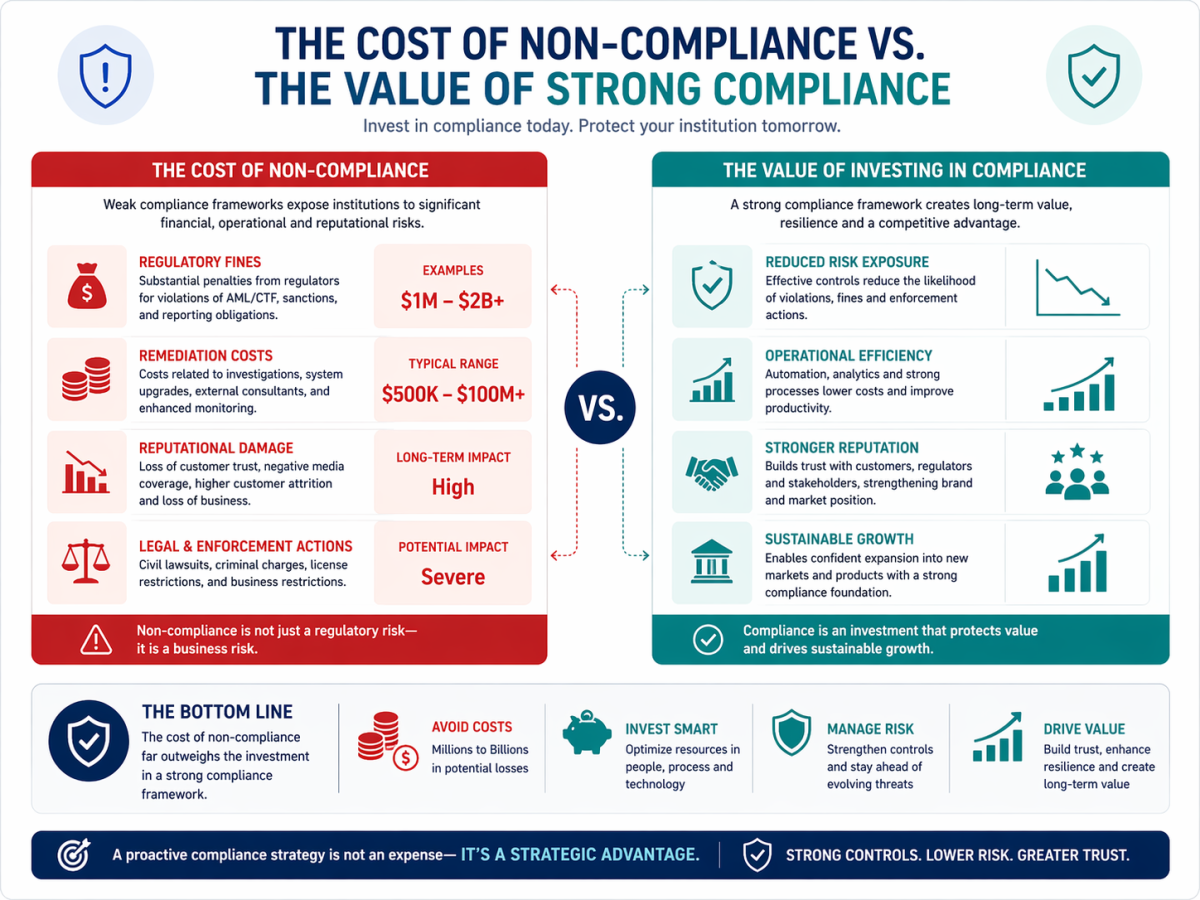
Industry data estimates that global financial crime compliance costs reach over $274 billion annually as regulatory pressure and system investments increase. However, it’s important to consider the cost in context. A weak framework can lead to:
- Regulatory fines
- Remediation costs
- Reputational harm
Investing in compliance consultancy for financial crimes and implementing scalable solutions normally results in greater efficiency and decreased risks.
Common Financial Crime Compliance Challenges
Even though there are clear expectations from regulations, some persistent issues exist within organizations:
- Fragmented systems and data silos
- False positive rates in monitoring systems
- Irregular use of a risk-based approach
- Limited integration between compliance and business units
Addressing these challenges requires a combination of governance, technology, and operational discipline.
How to Implement a Financial Crime Compliance Framework?
To build an effective financial crime compliance framework, institutions should follow a structured approach:
- Define risk tolerance and legal responsibilities
- Conduct a comprehensive risk assessment
- Design policies and set up control systems
- Implement systems and operational processes
- Establish monitoring, testing, and validation mechanisms
- Continuously improve based on risk and regulatory changes
This keeps the framework flexible and in line with new threats.
Final Thoughts
Following the rules is only one part of making a strong financial crime compliance framework. It involves taking a practical and risk-centric approach that involves governance, technology, and effective operations. Institutions that put money into well-structured frameworks, backed by solid financial crime compliance solutions and skilled financial crime services, are in a better place to manage risk, meet regulatory expectations, and operate with confidence.
Ultimately, effective compliance is not about avoiding penalties. It is about building systems that can withstand scrutiny, adapt to change, and deliver consistent, defensible outcomes.