

Estimated reading time:5 minutes
Transaction monitoring sits at the heart of any credible anti-money laundering program. It is where policy stops acting like a document on a shelf and starts being tested against the messy, unpredictable reality of real financial behavior. No matter how well-crafted your framework, it is only as strong as the systems flagging suspicious activity and the investigators making sense of what those flags are actually telling them.
Effective transaction monitoring isn’t just about generating alerts. The real value lies in understanding what those red flags actually mean, identifying unusual patterns, reading them in context, and making timely, informed decisions about what to escalate.
Key Takeaways
- Risk-Based Focus: Effective monitoring prioritizes genuine risk over sheer volume of alerts.
- Scenario Calibration: Scenarios must be continuously tested and calibrated to balance false positives and false negatives.
- Data Integrity is Crucial: Poor KYC or late transaction data undermines the entire detection framework.
- Governance: Monitoring requires board-level supervision and clear escalation procedures to function as a true risk control tool.
Table of contents
What is the Purpose of Transaction Monitoring?
The primary purpose of transaction monitoring is to detect behavior that could indicate anti-money laundering failures, terrorist financing, fraud, or sanctions evasion. By applying risk-based rules and scenarios, financial institutions can fulfill their regulatory obligations to identify and investigate anomalous financial activity.
Regulatory bodies like the Financial Action Task Force (FATF) and legislation such as the USA PATRIOT Act set that expectation, and the consequences of falling short are serious.
A well-designed financial crime compliance framework typically does the following:
- Applies risk-based rules and scenarios tailored to your institution.
- Uses customer risk ratings as key context for investigative decisions.
- Screens for known red flags and typologies relevant to your products and markets.
- Produces triggers for human review and thorough investigation.
- Documents all investigative outcomes with clear audit trails.
The goal isn’t to generate as many flags as possible. It’s proportionate, risk-based detection that your team can meaningfully act on.
Core Components of a Monitoring Framework
Scenario Design
Detection transaction monitoring scenarios should mirror the threats your institution actually encounters in practice. A customer who opens an account and immediately begins pushing funds through it, another who keeps deposits frustratingly close to the reporting threshold, or one whose transactions have nothing to do with the business they claimed to run. These are not cases pulled from a training manual. They are the alerts that land in a compliance officer’s queue every morning, and they demand the same rigorous scrutiny every time.
Scenarios need to be tailored by product type, geography, and customer segment to remain effective.
Threshold Calibration
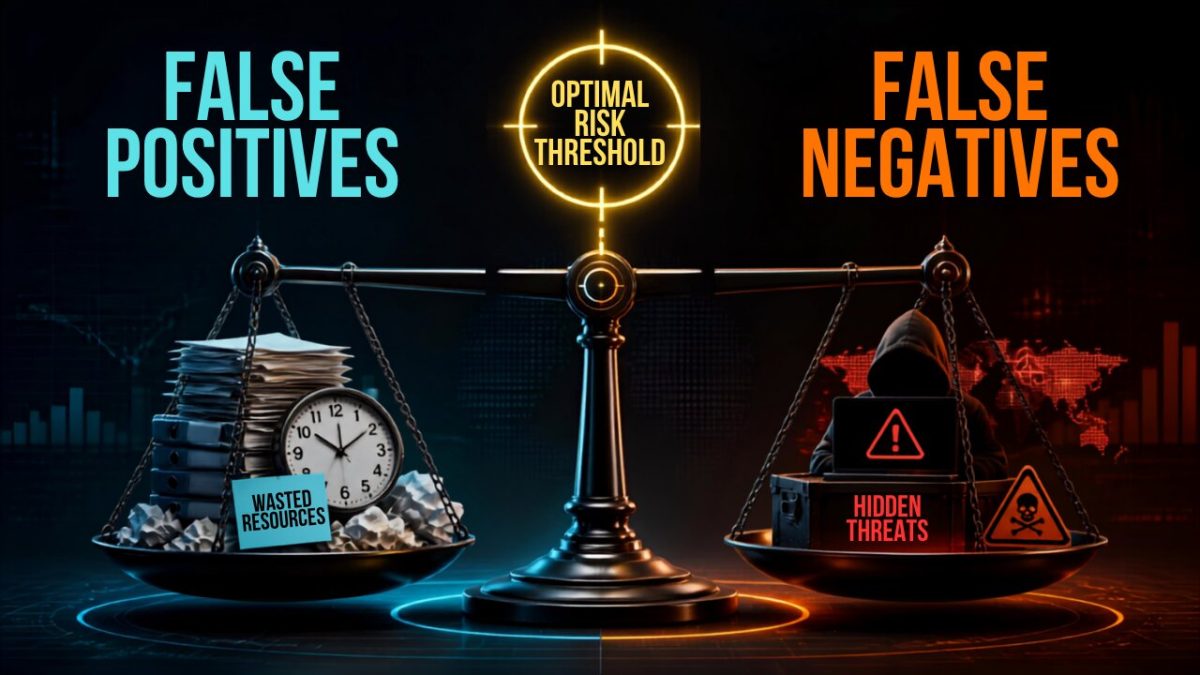
Calibrating thresholds is a never-ending process. Too high, and real risk falls through the cracks. Too low, and your investigators are wading through a sea of noise.
Data Integrity
The quality of your detection capabilities will only be as strong as the data on which it is based. Incomplete KYC onboarding baseline records, missing beneficiary data, or late transaction data feeds can quietly weaken your program before anyone even knows what is missing.
From Alert to Investigation
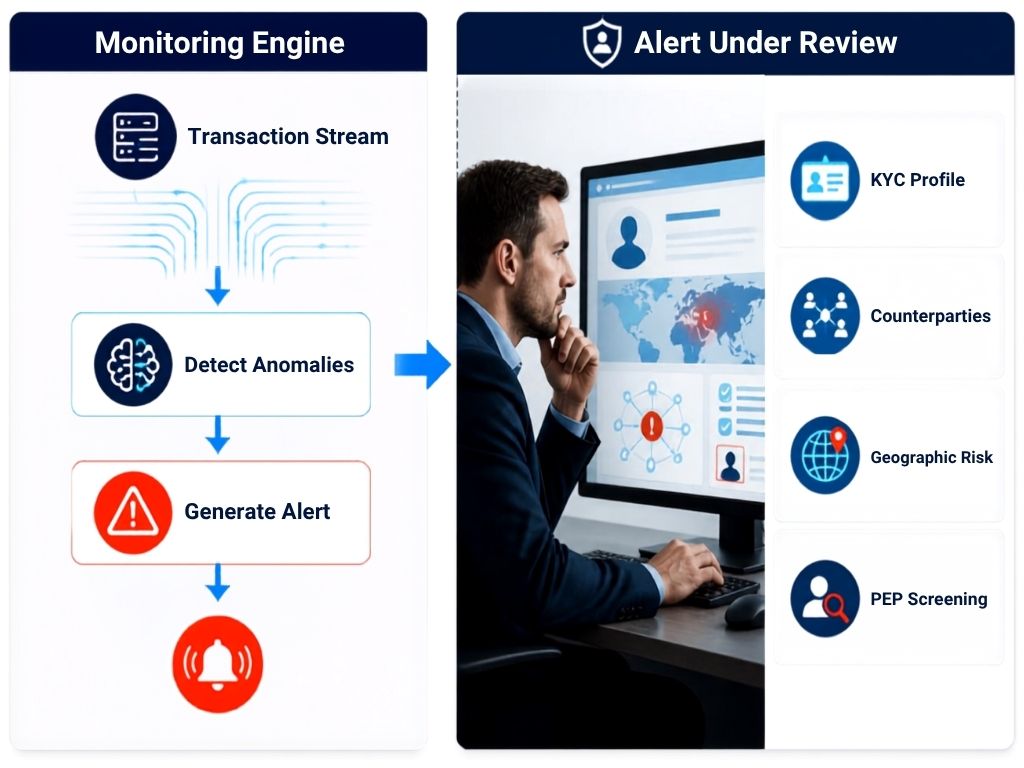
When an alert generates, the investigator’s role is to assess whether it indicates real risk. This includes assessing the transaction history, comparing transaction activity with the customer’s expected behavior, assessing counterparties, identifying connections under an institutional sanctions compliance program or PEP watchlists, and evaluating risk indicators arising from adverse media or intelligence.
Once investigators verify a suspicion, regulators may require a Suspicious Activity Report (SAR). During this process, governance bodies such as the Basel Committee have high standards for documentation and escalation decisions.
Balancing False Positives and False Negatives
This is a problem that every compliance team faces. Having too many false positives can drain investigators’ resources and delay responses. Having too few false positives can lead to genuine threats being overlooked.
Top-performing institutions manage this through risk-based customer segmentation, scenario validation, independent model review, and quality assurance testing. The system must be able to adapt to emerging typologies and regulatory requirements.
Governance and Accountability
AML transaction monitoring is not an isolated process. Boards must supervise the program, compliance and operations teams must share accountability, independent teams must conduct periodic reviews, and leadership must define clear escalation procedures. Otherwise, monitoring transactions becomes a technical process rather than a true risk control tool.
Conclusion
Anti-money laundering transaction monitoring is more than just fulfilling regulatory requirements. It is a critical risk management solution for institutions aiming to safeguard the financial system against misuse. A good system must integrate risk analysis, intelligent scenario development, threshold setting, expert investigators, and robust governance. By aligning monitoring and investigation, financial institutions move from a reactive compliance posture to a proactive financial crime risk management approach.