
Table of Contents
- Overview of Sanctions Compliance Programs
- Sanctions Regulatory Landscapes
- Types of Sanctions Regimes
- Obligations for Financial Institutions
- The Core Elements of a Sanctions Compliance Program
- Sanctions Risk Implications
- Common Challenges in Sanctions Compliance Program
- Sanctions Program Testing, Assurance, and Continuous Validation
- Final Perspective
The management of trade barriers is a vital part of managing financial crime threats. The response of regulators to errors is often swift. Financial institutions are often held liable, irrespective of their reason. These errors have the potential to attract legal and reputational consequences in the long term. Good internal controls are essential for financial institutions to offer good governance, trust, and stability to regulators. This article examines the structural components of sanctions compliance program, the regulatory guidelines for their functioning, and the benefits of having a clear and actionable sanctions framework.
Overview of Sanctions Compliance Programs
What is the Purpose and scope?
A sanctions compliance program aims to ensure that financial organizations are not involved in any illegal activities with a sanctioned individual, company, vessel, or region. The aim is to stop these activities before they are carried out, rather than trying to identify them after the fact. This is a key differentiator between sanctions compliance and other financial crime compliancemeasures, which are more likely to focus on detection and reporting.
Sanctions compliance is critical across all aspects of the financial institution’s customer life cycle and transaction processes. These aspects include onboarding, payments, trade finance, correspondent banking, securities, and custody. The sanctions program must address the direct risks associated with dealing with sanctioned entities. The indirect risks must also be considered.
Sanctions Vs. AML: What is the difference?
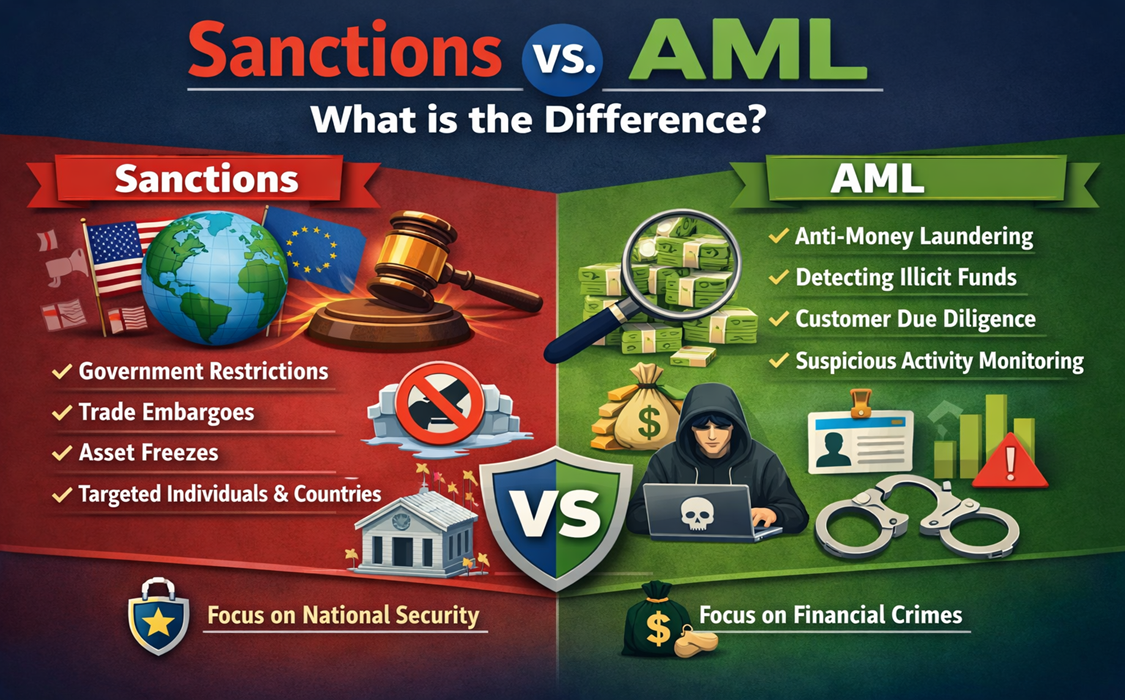
Although sanctions and AML share similar infrastructure, their objectives differ. AML systems concentrate primarily on detecting suspicious transactions linked to criminal activity and reporting them to the appropriate authorities. A sanctions compliance system, however, is a prohibition system. If a sanctioned party is involved, then the transaction will not be allowed, regardless of intent or transaction volume.
This creates a regulatory environment around sanctions.
Source: ChatGPT
Breaches of sanctions regulations will be treated as a strict liability offense. This means a breach will be enforced regardless of intent or knowledge. AML breaches, while serious, will be treated as a failure of detection rather than a prohibited practice.
Sanctions Regulatory Landscapes
Source:Facctum
Types of Sanctions Regimes
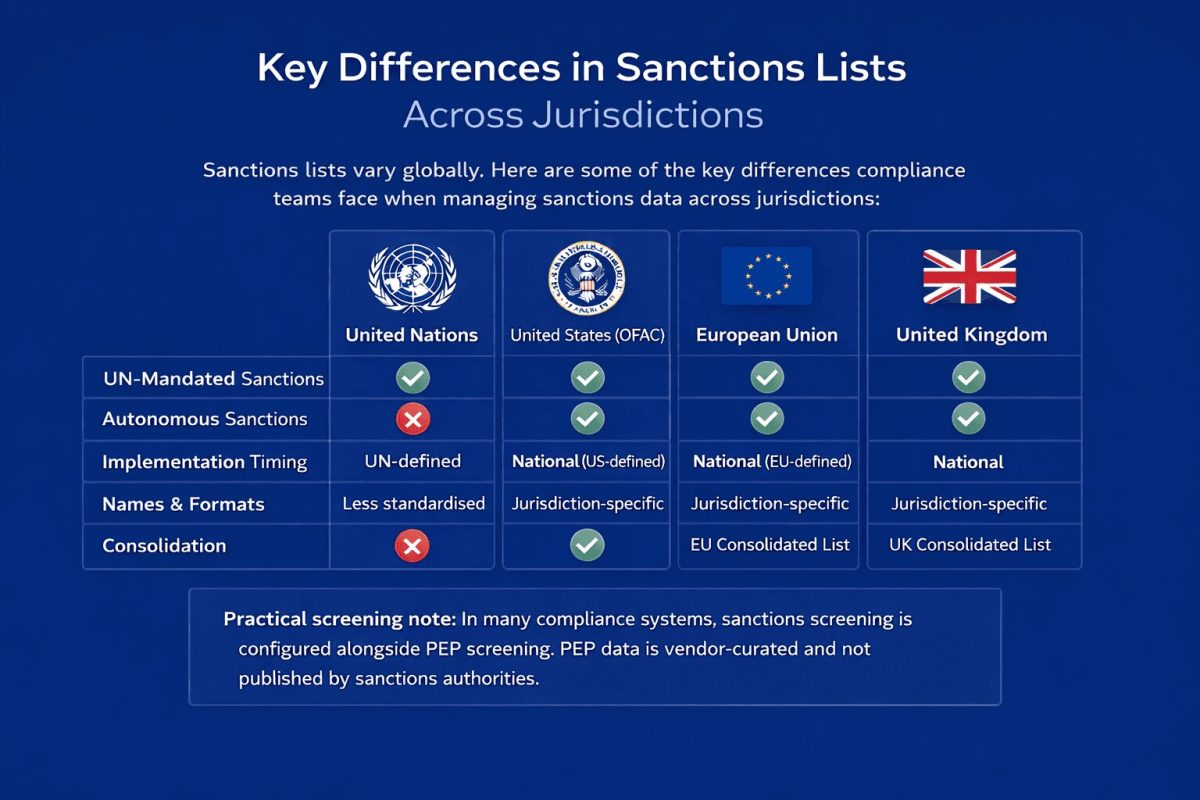
Institutions operating in multiple regions face complex regulatory requirements. These usually fall into several categories. Some rules apply widely across whole jurisdictions or geographic areas. Others focus on specific individuals, entities, or groups. There are also restrictions aimed at particular industries, that limit certain types of financial or commercial activities within those sectors. Additionally, some regulations extend beyond borders, imposing requirements on foreign institutions if they take part in prohibited transactions.
For international organizations, this means navigating the overlapping and sometimes conflicting requirements of several authorities. A strong sanctions compliance program is essential to meet the expectations of bodies such as the European Union (EU), the United Nations Security Council Resolution (UNSCR) and the Office of Foreign Assets Control (OFAC), the UK Sanctions List.
Obligations for Financial Institutions
Authorities increasingly seek internal frameworks that clearly show an institution’s specific risk exposure. A key part of this effort is the need for accurate screening, the ability to act quickly when issues come up, and the upkeep of a detailed audit trail for every decision made. Additionally, modern standards demand more than just fixed policies. Firms must now prove that they are regularly reviewing their risk assessments and addressing any weaknesses within a clear and justifiable timeframe.
The Core Elements of a Sanctions Compliance Program
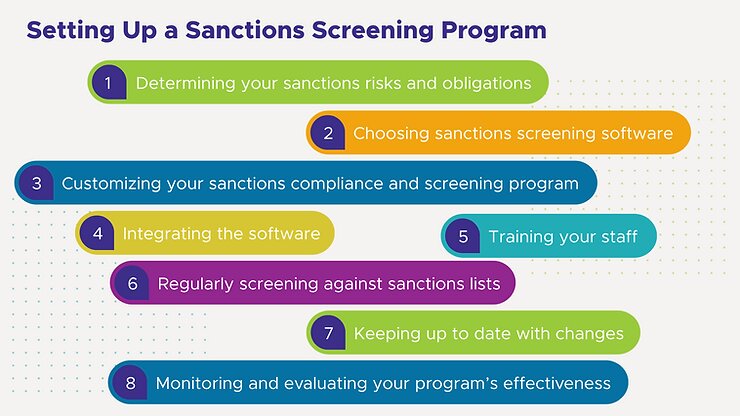
Source:FinScan
Governance and Accountability
There are also requirements for the governance of sanctions arrangements in terms of the clear roles and reporting lines, escalation authority, substantive rather than formal oversight by the organization’s senior management and board, and the need for there to be independence and authority within the organization for the sanctions officer.
The lack of good sanctions governance arrangements is another type of reason cited in enforcement actions. The most common reason for this is the ambiguity of the accountability arrangements or the escalation arrangements, rather than the organization lacking the necessary policies.
Screening and Interdiction Controls
Screening is the operational process through which sanctions interdiction is achieved. Screening occurs as an institution checks its customers, counterparties, or payments against the appropriate sanctions lists to ensure that there are no matches before the transaction or the relationship is established.
These frameworks should be able to:
- Update the restricted party lists quickly.
- Handle complex data types such as names and non-Latin scripts.
- Balance accuracy with the risk of overwhelming the workload.
The controls should also be able to block or reject prohibited activities in real time. Sanctions screening should not rely on post-transaction alerts or other systems that require the fixing of issues after the fact rather than preventing the issues at the point of entry.
Escalation and Reporting
Clear procedures for escalating alerts ensure they are reviewed based on their risk and complexity. When required by law, firms must report blocked or rejected transactions within specific timeframes. Even if the initial screening is effective, errors in the escalation process—such as late reporting or inconsistent handling—can lead to regulatory action.
Sanctions Risk Implications
Legal and Regulatory Consequences
Failure to comply with regulatory demands may lead to huge fines, operational constraints, and even a requirement for remediation. In extreme circumstances, an institution might even be denied a license to operate, at least to some capacity. There is also a move towards personal accountability. The current regulatory environment closely examines the decisions made by individuals in management in dealing with identified risks, rather than holding a corporation liable as a whole.
Reputational and Operational Risks
In addition to this, there are financial implications, as well as a loss of confidence. Furthermore, there are implications for the banks involved, as they may try to distance themselves from a regulatory failure. To address this, there is a need for significant technical investment, as well as manual labor, which can be a drain on resources. The damage to reputation is also a major concern, as this is tied to issues of national security.
Common Challenges in Sanctions Compliance Program
Screening Limitations
Screening processes often encounter problems from low-quality data, reliance on matching only names, and challenges in tracking complex ownership and control structures. Normally, system settings are adjusted to reduce false alert volumes without adequate testing for missed matches. These problems are often made worse by outdated technology and broken screening systems, especially when handling complex, multi-step payment chains.
Governance and Oversight Gaps
Enforcement findings often point to governance failures, such as unclear accountability, lack of independent challenge, and slow issue resolution. In many cases, institutions recognized control gaps but did not fix them in a timely manner. A sanctions program works effectively only if its oversight structure allows for it. Without regular support from senior management and independent checks, technical controls weaken over time.
Emerging Expectations and Program Evolution
Expectations are also changing with the changing geopolitical environment. Institutions are expected to quickly implement new sanctions measures, carry out risk assessments on a number of scenarios, and integrate sanctions programs with other financial crime controls. Many financial institutions are looking for a sanctions compliance program sample to speed up the process. However, it is emphasized that the final goal is to be able to design a sanction compliance program that meets the specific risk profile of a financial institution. Even if generic models are available to provide structural solutions, they are often not designed to consider the special intricacies of each institution.
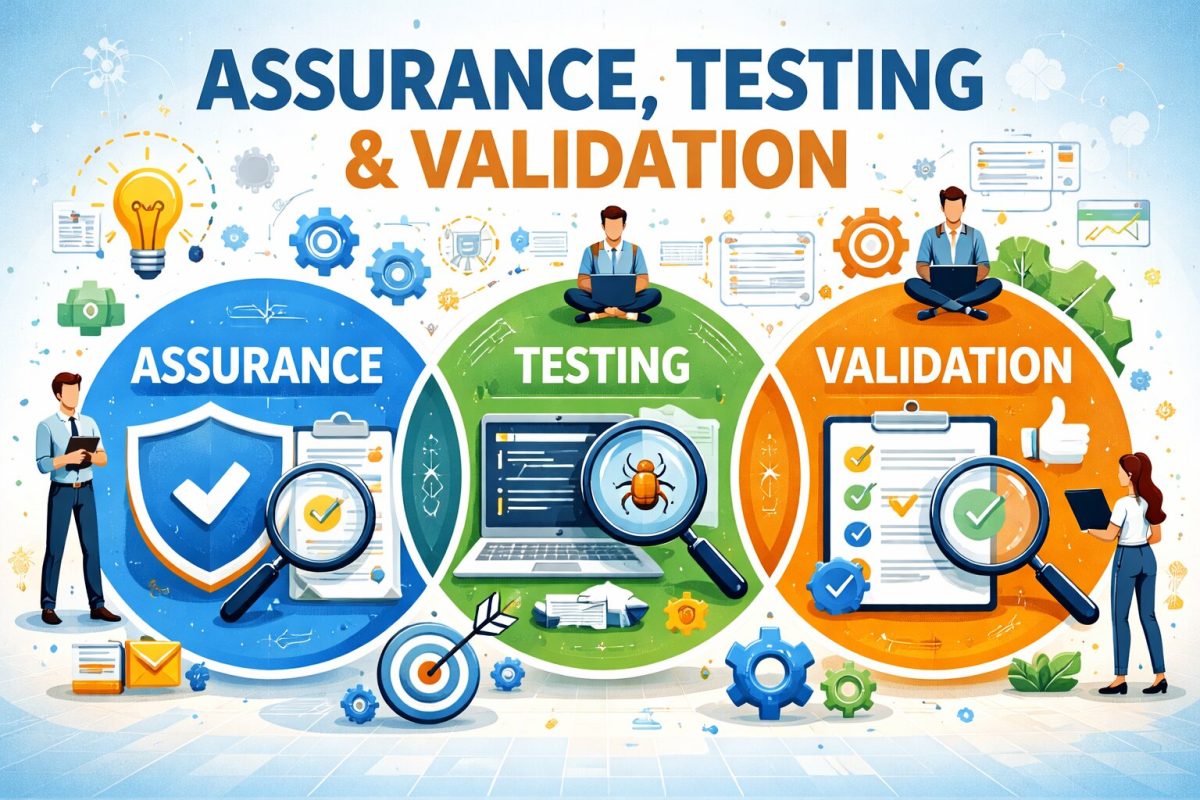
Sanctions Program Testing, Assurance, and Continuous Validation
Source: ChatGPT
A sanctions compliance program built around OFAC framework cannot rely on design and documentation alone. Regulators assess whether controls function as intended under operational conditions, particularly during heightened geopolitical risk.
Testing occurs on two levels. First, quality reviews are conducted on a regular basis to assess the quality of alert management for various types of transactions and business areas. Here, it is checked if the alerts were assessed correctly. Second, there is a strong focus on false negative risk, especially if tuning decisions resulted in fewer alerts without proper documentation.
For effective oversight, there is a need to regularly test screening systems. Here, there is a need to assess if restricted lists are being uploaded correctly, if matching logic correctly identifies various name types and scripts, and if all relevant data fields are being screened. Testing should not be limited to simple name matching but should also consider complex scenarios, including indirect ownership, entities under control of restricted parties, and non-Latin names.
An independent review verifies that internal controls are functioning as expected. Audits of governance models are done on a regular basis. Audits verify if there are adequate staffing and technology resources. Audits also monitor the speed of resolution for identified issues. In addition, for institutions with a high-risk profile, it is often necessary to have independent model validation or external assessments, particularly if third-party or algorithmic tools are used.
The testing programs to improve integrity should be strengthened and address a number of areas. Organizations should track identified weaknesses continuously to have a sense of visibility. There should be ownership of the issues, and certain teams or people should be held accountable for the results. There should be a realistic time frame for resolution, and it should match the planned resolution time.
A clear pattern shows in institutional failures. They often occur when organizations respond slowly to issues or when leadership oversight is missing. Institutions that handle risk effectively use testing in their daily operations instead of viewing it as a separate compliance task. The results of tests then help decide where to allocate resources and which areas of governance need focus.
Final Perspective
Managing global trade and financial restrictions involves balancing regulatory responsibilities, geopolitical risks, and everyday operations. For financial institutions, a solid sanctions compliance program is not just about avoiding penalties. This program is vital for keeping regulatory credibility, improving operational strength, and fostering the professional trust needed to operate successfully in the global market.