


Estimated reading time:6 minutes
KYC services support the collection, verification, screening, risk assessment, and maintenance of customer information used in customer due diligence. They may combine internal teams, specialist providers, data sources, and compliance technology.
For banks, fintechs, DNFBPs, and other regulated institutions, KYC goes beyond collecting an identity document. The institution must define its requirements, assess customer and beneficial-ownership risk, handle exceptions, and oversee ongoing due diligence under the rules that apply. This guide explains the scope of KYC services, how technology and providers can support the work, and what compliance teams should evaluate.
KYC services are the people, processes, data, and technology used to establish and maintain an evidence-based understanding of a customer. Their scope varies by jurisdiction and risk, but commonly includes identification, verification, ownership checks, screening, risk assessment, enhanced review, refresh, and ongoing monitoring.
Key Takeaways
KYC services help regulated organizations identify and verify customers, understand ownership and purpose, classify risk, perform screening and enhanced due diligence, and keep customer information current. They may combine internal teams, specialist providers, data sources, and compliance technology, but the regulated institution remains responsible for governing decisions and meeting applicable obligations.
- KYC services can cover identity verification, beneficial ownership, risk classification, screening, enhanced due diligence, periodic review, and ongoing monitoring.
- FATF Recommendation 10 provides the central CDD framework, while Recommendations 12, 24, and 25 address PEPs and beneficial ownership.
- Technology can automate collection and screening, but teams must govern exceptions, data quality, model outputs, escalation, and audit trails.
- Provider reviews should consider jurisdictional coverage, data provenance, integration, explainability, service levels, security, and human-review support.
Table of contents
What does KYC stand for in compliance?
KYC (Know Your Customer) is the mandatory process of identifying and verifying the client’s identity when opening an account and periodically over time.
What Are KYC Services and What Do They Cover?
KYC (Know Your Customer) services are the people, processes, data, and technology used to establish and maintain an evidence-based understanding of a customer. Depending on jurisdiction and risk, they may include identification and verification, beneficial-ownership checks, understanding the purpose and intended nature of the relationship, risk classification, screening, enhanced due diligence, refresh, and ongoing monitoring.
| Activity | Purpose | Example evidence or output |
|---|---|---|
| Identification and verification | Establish who the customer is | Verified identity or company records |
| Beneficial ownership and control | Understand who ultimately owns or controls the customer | Ownership record and verification evidence |
| Purpose and intended nature | Understand why the relationship is being opened | Expected activity and relationship profile |
| Risk assessment | Apply defined customer-risk factors | Risk rating with documented rationale |
| Screening | Identify potential sanctions, PEP, or adverse-media indicators | Results, match decisions, and escalation record |
| Enhanced due diligence | Investigate higher-risk factors where required | Additional evidence, review, and approval |
| Refresh and ongoing monitoring | Keep the customer view current | Periodic or event-driven review record |
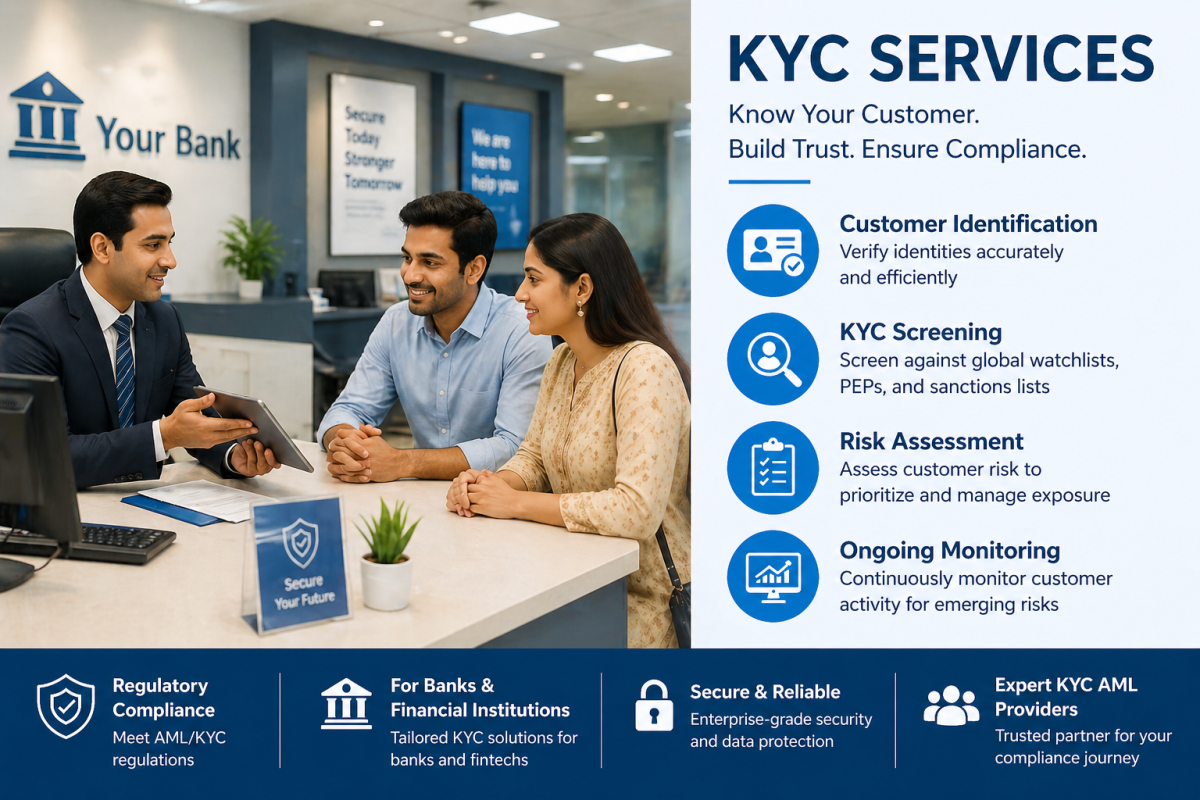
Screening can help teams identify potential global sanctions regimes, PEP, and adverse-media indicators that require review. A screening result is a starting point for analysis, not a final legal or customer-risk conclusion. Depending on the applicable requirements and institutional risk assessment, screening and customer information may need to be refreshed periodically and when relevant events or data changes occur.
How Does KYC Compliance Software Support Teams?
KYC technology can support data collection, identity checks, screening, workflow, risk scoring, document management, and audit records. Its value depends on the institution’s volume, complexity, data quality, configuration, exception handling, and oversight; automation does not by itself make a process consistent or defensible.
A larger or more complex institution may need scalable workflows, configurable risk rules, screening integration, controlled approvals, and a reliable audit trail. Case-management capability may be built into the platform or integrated with a separate AML case-management system; the required design should follow the institution’s operating model rather than a universal feature list.
KYC software can organize inputs such as geography, customer type, product use, delivery channel, and ownership complexity into a structured assessment. Compliance teams still need to validate the inputs, govern the methodology, review exceptions, document judgment, and monitor whether the resulting classifications operate as intended.
What Should Compliance Teams Expect From a KYC Provider?
Institutions may use providers for identity verification, company data, screening data, adverse-media intelligence, workflow technology, or managed operational support. Outsourcing can change who performs an activity, but it does not remove the need to define the service boundary, oversee performance, manage exceptions, retain evidence, and meet the responsibilities that apply to the institution.
| Review area | Questions for the compliance team |
|---|---|
| Scope and jurisdiction | Which customer types, documents, languages, countries, and regulatory use cases are supported? |
| Data provenance and updates | Where does the data come from, how is it verified, and how quickly are changes reflected? |
| Matching and explainability | Can the team understand thresholds, matching logic, scores, and reasons for a result? |
| Exceptions and human review | Which cases require manual handling, escalation, approval, or specialist review? |
| Integration and evidence | Can inputs, results, decisions, overrides, timestamps, and approvals be retained or exported? |
| Security and privacy | How are access, retention, data location, subcontractors, and incident handling controlled? |
| Service and resilience | What service levels, quality measures, support routes, continuity plans, and remediation duties apply? |
| Exit and portability | Can the institution retrieve its data, evidence, rules, and open work if it changes provider? |
How Do Risk-Based KYC and Ongoing Monitoring Work?
Under guidelines such as FCA FCG 3.2, it is important to understand that not all customers pose the same level of risk, and due diligence must be applied proportionately. It’s imperative to ensure that your compliance program accurately represents this. High-risk customers should be given extra scrutiny regarding due diligence, ownership, and periodic refresh cycles. On the other hand, low-risk customers should be able to go through a streamlined process as long as all the criteria are met. It’s also vital to ensure that changes to a customer’s sanctions risk, PEP risk, or adverse media are identified promptly so they’re not discovered too late, after the fact, so to speak.
“This customer-level approach should align with the institution’s broader financial crime risk management framework.”
Once a customer is onboarded, ongoing surveillance relies on automated transaction monitoring frameworks to detect behavioral anomalies against baseline expectations.
Final Perspective
A robust compliance program remains an institution’s most effective line of defense, protecting it from regulatory censure, reputational damage, and material financial losses. Whatever the scale of investment or the sophistication of the controls deployed, the fundamental mandate is to ensure you do know your customer, assess the risk, and document the outcome with precision, consistency, and unwavering accountability. As the regulatory landscape continues to evolve, the significance of KYC checks does not simply persist; it intensifies.