
Transaction monitoring sits at the heart of every AML regime, yet it’s also where many institutions struggle without knowing. A poorly calibrated system either drowns compliance teams in false positives or lets genuine suspicious activity slip through. Getting the scenarios and frameworks right isn’t a technical afterthought. It’s a core regulatory compliance obligation with real consequences for all financial institutions.
Transaction monitoring is still a big part of the cost of AML compliance and the focus of regulators. Surveys of the industry and reviews by supervisors consistently show that transaction monitoring tasks, such as reviewing alerts, investigating them, and escalating them. These tasks exhaust up 40% to 60% of the AML operational resources of large financial institutions. According to authorities like FinCEN and the FCA, most of the AML-related enforcement actions from the past 10 years point to problems with ineffective monitoring and lack of governance, alert handling or documentation, rather than a lack of detection mechanisms.
This difference shows a common concern among supervisors. Even though institutions send out a lot of transaction monitoring alerts, often millions a year for big banking groups, regulatory findings still show that it is hard to explain how those alerts were prioritized, looked into, and fixed. From a regulatory standpoint, the concern is not the occurrence of monitoring, but rather the ability to demonstrate that monitoring outcomes are risk-based, consistent, and defensible.
In this context, AML transaction monitoring is being looked at more and more as a governance framework instead of just a technical function. For monitoring to work, policy intent, data architecture, typology design, investigative judgment, and oversight all have to be in sync. Institutions are more likely to be watched over when this alignment isn’t strong, no matter how advanced their systems are.
This article talks about how AML transaction monitoring frameworks are set up, how they work in real life, and where institutions are most likely to run into big regulatory problems.
Key Takeaways
- A framework sets the governance and accountability standards, while a system is the technology used to execute it.
- Ineffective monitoring leads to regulatory enforcement actions and exhaust up to 40% to 60% of an institution’s AML operational resources.
- Modern transaction monitoring relies heavily on integrating dynamic risk thresholds with baseline customer onboarding profiles rather than static rules alone.
- Robust model governance, ongoing tuning, and data quality checks are required by regulators like the FCA and FinCEN.

Table of contents
- Key Takeaways
- What Is an AML Transaction Monitoring Framework?
- What Is an AML Transaction Monitoring System?
- What Is the Purpose of AML Transaction Monitoring?
- What are the Core Components of Transaction Monitoring Frameworks?
- How are Alerts and Surveillance Outcomes Managed?
- What is the Governance and Oversight of Monitoring Frameworks?
- What are the Key Limitations and Risk Considerations?
- Emerging Trends in Transaction Monitoring Frameworks
- Final Verdict
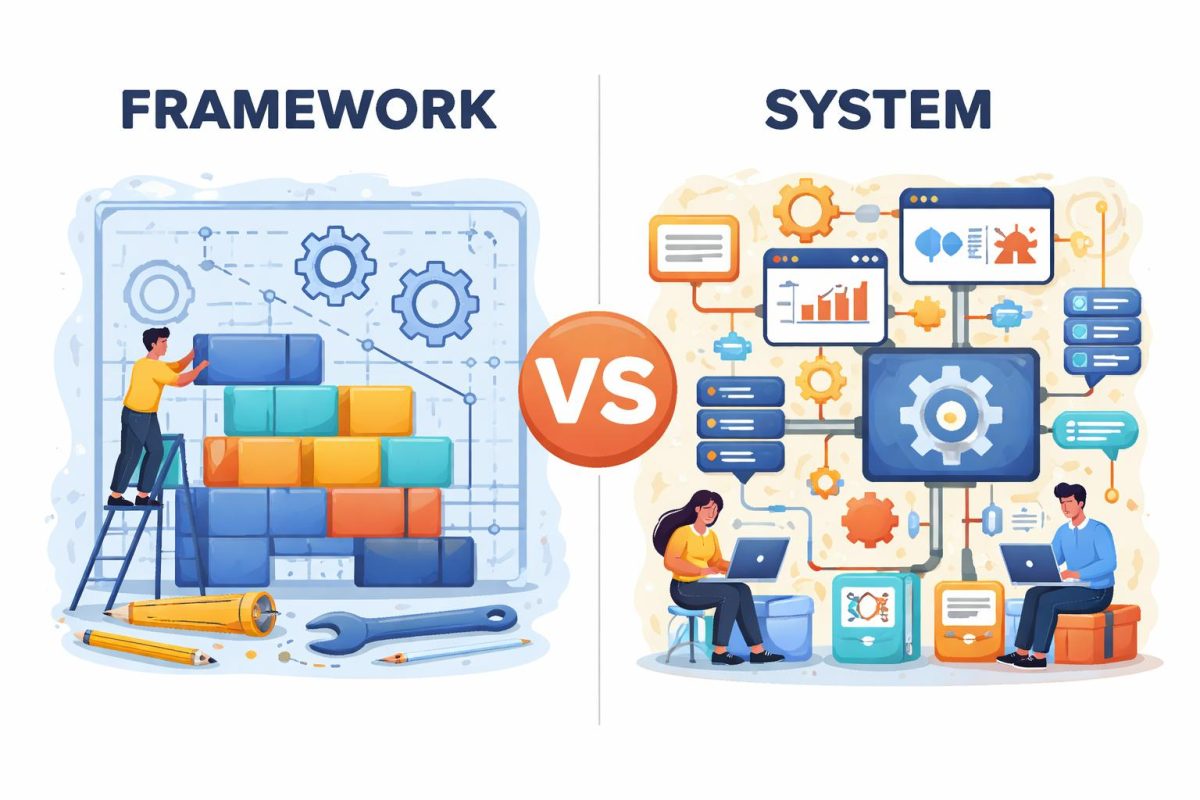
In practice, there is often confusion between the framework for monitoring AML transactions and the system that supports it. Regulators and internal audit functions make it very clear what the difference is between the two. Not understanding this difference is still a common reason for criticism of supervisors.
A framework sets standards for governance, accountability, and control. A system makes it possible to carry out. When the line between them is not clear, institutions may rely too much on technology and not enough on governance and documentation needs.
What Is an AML Transaction Monitoring Framework?
An AML transaction monitoring framework represents the governance and control architecture that defines how monitoring activities are designed, operated, reviewed, and justified.
Most of the time, it includes:
- The institution’s tracking goals and risk tolerance
- Links to ML/TF risk studies done across the whole company
- The written justification for covering scenarios and types
- The rules for managing warnings, escalations, and reports
- The clear roles, tasks, and who is responsible for what
- The methodologies for change management, tuning, and validation
From a regulatory perspective, the framework addresses a basic question:
“How does the institution demonstrate that transaction monitoring is risk-based, managed, and defensible?”
A strong framework exists independently of any specific technology solution.
What Is an AML Transaction Monitoring System?
The architecture is executed using a transaction monitoring system as the technical platform to process data, execute analytical logic, and generate alerts. Regulators emphasize that a system is an enabler of governance, not a substitute for it.
These types of systems typically provide support for:
- Ingestion and processing of data
- Logic for analytical or rule-based detection
- The execution of thresholds and the generation of alerts
- Functionality of workflow and case management
- Audit trail and reporting capabilities
The system provides an answer to a distinct inquiry:
“What technology is used to operationalize monitoring?”
From a supervisory standpoint, a system is an enabler of governance, not a substitute for it.
What Is the Purpose of AML Transaction Monitoring?
The primary purpose of AML transaction monitoring is to detect behavioral anomalies that indicate potential money laundering or terrorist financing. It acts as a detective control that flags suspicious activities for human review and regulatory reporting.
Role in Detecting Suspicious Activity
The main goal of transaction monitoring is to find activity that doesn’t fit with what you know about a customer, what you expect them to do, or what your business is supposed to do. Monitoring systems don’t prove that financial crime exists; instead, they detect suspicious activity.
Monitoring frameworks that are well-designed typically concentrate on the following:
- The observed behavioral deviations over time
- The patterns that are linked to recognized typologies of money laundering or terrorist financing
- The transactions that aren’t caught by security measures but can be seen by looking at how the account is used
Transaction tracking is like a detective check; it works with customer due diligence and sanctions screening, not instead of them.
Relationship With AML Regulatory Obligations
Regulators think that financial institutions will set up tracking systems that are fair, based on risk, and can be shown to work around the world. Even though standards vary by jurisdiction, supervisory expectations always stress the following:
- The wide range of relevant goods, customers, locations, and delivery methods explored
- The clear line of responsibility from risk assessment to monitoring design
- The established ways to report and take up suspicious behavior
Enforcement actions often talk about failures in transaction monitoring. This isn’t because criminal behavior was missed on its own, but because of bad governance, poor documentation, or slow responses.
What are the Core Components of Transaction Monitoring Frameworks?
Monitoring Scenarios and Typologies
Through monitoring situations, the risks of financial crime are turned into logic that can be used to find crimes. Most of the time, these situations are caused by:
- The risk estimates that were done at the business and institutional levels
- The well-known types of money laundering and funding for terrorism
- The views on enforcement and regulatory guidance
- The results of past SAR or STR cases and internal investigations
A distinct mapping between risk drivers and monitoring scenarios is maintained by effective frameworks, ensuring that coverage is intentional rather than accumulative.
Thresholds and Rule Logic
Different levels of variation in transactional behavior show when it becomes a potential cause for concern. Ineffective tracking results are often caused by bad calibration.
Considerations that are usually important are:
- Using absolute or relative thresholds
- Velocity, collection, and structure logic
- Differentiation based on product type or customer risk rating
As stated, thresholds should reflect risk tolerance rather than practical ease. Not strong detection ability, but design misalignment is often what persistently high alert numbers mean.
Customer and Product Risk Inputs
Monitoring transactions doesn’t happen by itself. Some common risk factors are:
- The ratings of customer risk
- The classifications of product and service risk
- The signs of geographical exposure
- The characteristics of the delivery channel
These inputs help with risk-differentiated monitoring, making sure that relationships with a higher level of risk get the attention they need without flooding investigators with too many low-risk alerts.
How are Alerts and Surveillance Outcomes Managed?
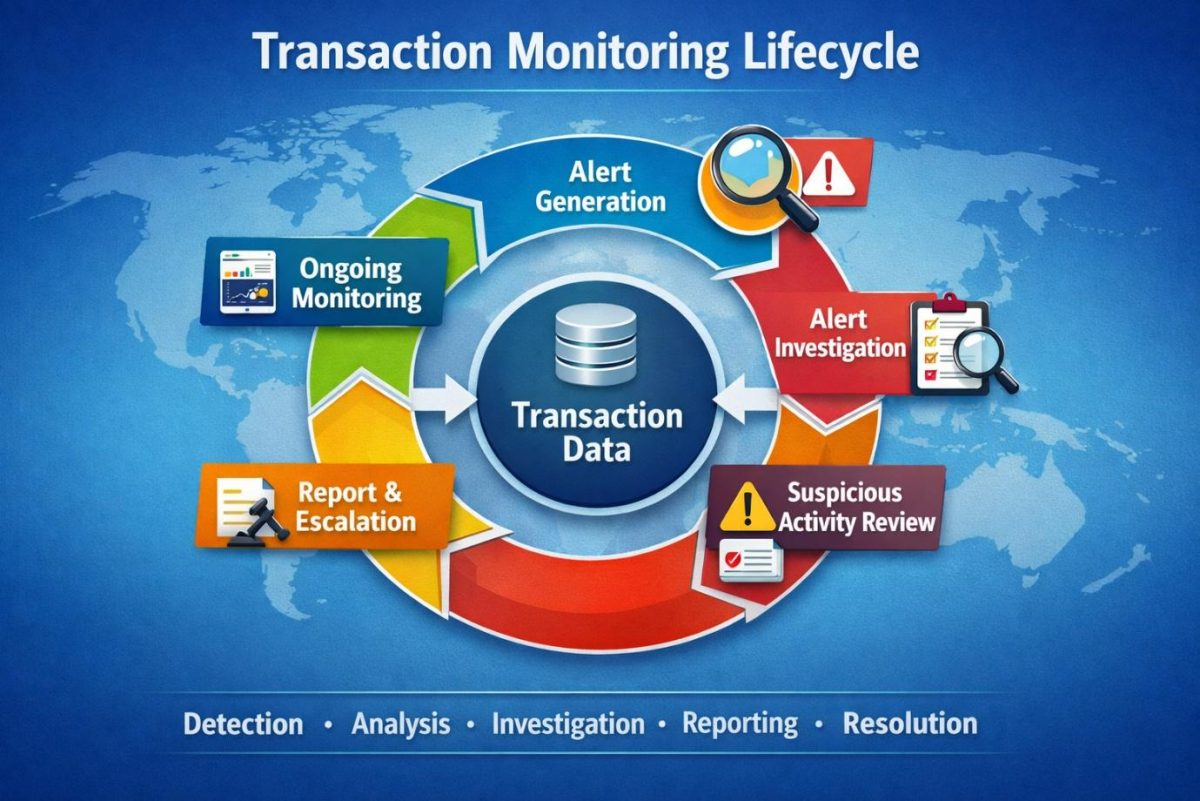
Generation of Alerts
Alerts are messages sent by a system to let you know that certain conditions have been met. They are not findings, but rather starting points for further study.
Usually, the quality of an alert rests on:
- Correctness and thoroughness of the data
- How the scenario applies
- Calibration of the threshold
- Processing on time
An rise in the number of alerts does not necessarily mean that compliance is better; it could instead mean that there are problems with the calibration.
Alert Review and Escalation
When you handle an alert, you move from using system logic to using your professional judgment. Most of the time, review methods should:
- Always the same and well-documented
- Backed up by important background information
- Must go through quality control and second-line oversight
The factors for escalation must be clear, able to be defended, and in line with the need to report to regulators. At this point, weak paperwork is still something that supervisors often notice.
What is the Governance and Oversight of Monitoring Frameworks?
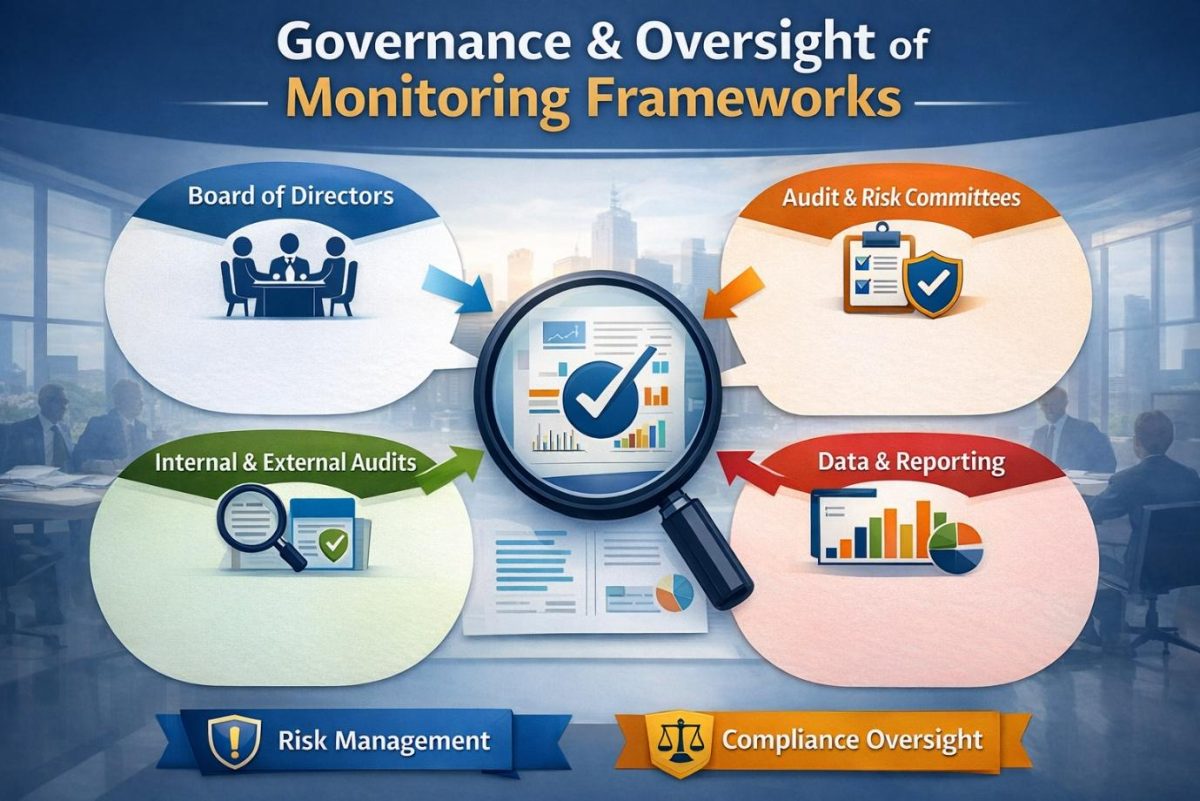
Model Governance and Accountability
Formal governance frameworks are needed for transaction monitoring systems, especially those with machine learning or complex logic components. Clearly defined ownership, independent validation, and controlled change management are some of the most popular ones. Regulators usually think that problems with oversight are worse than single detection gaps.
Ongoing Tuning and Review
Monitoring systems change as customer behavior, new types of customers, new products, and government rules and regulations all come into play. People usually expect activities that involve tuning to be based on facts and have clear audit trails that show both why changes were made and how they affected things.

What are the Key Limitations and Risk Considerations?
False Positives and False Negatives
There is a trade-off that comes with tracking transactions:
- False positives put stress on operating capacity and the investigators’ ability to make good decisions.
- False positives make you more vulnerable to fines, lawsuits, and bad press.
The goal is not to get rid of everything, but to find a risk-acceptable balance that is set by governance rather than alert volume measures.
Data Quality and Coverage Risks
The quality of the data limits even the most powerful monitoring logic. When data is missing, wrong, badly mapped, or broken up, it often raises concerns with supervisors.
Data lineage, reconciliation, and completeness testing are not technology add-ons; they are essential parts of control.
Emerging Trends in Transaction Monitoring Frameworks
From Rules-Based to Hybrid Models
A lot of organizations are switching to hybrid methods that use both old-fashioned rules and advanced financial crime analytics. These methods might make it easier to find things, but they also raise the bar for what supervisors expect as institutions increasingly look at how AI and machine learning are reshaping AML compliance.
Focus on Outcome-Based Effectiveness
More and more, supervisors judge tracking programs by how well they work, not how complicated the systems are. A lot of people look at things like whether or not important risks are found, alerts are properly looked into, and choices can still be defended when they are questioned.
Technology makes tracking possible, but it doesn’t get rid of responsibility.
Final Verdict
At the point where rules, data, technology, and expert opinion meet, AML transaction monitoring systems‘ credibility is based on how well threats are found, handled, and dealt with, not on how many alerts they send out.
For financial institutions, the ongoing challenge is to show that their frameworks for tracking transactions are not only useful but also risk-aligned, managed, and, in the end, defensible.